
WELCOME BONUS 300%
UP TO €2000 + 100
FREE SPINS
UP TO €2000 + 100
FREE SPINS
Home → Sports Betting
Sports Betting at Money X Casino: Odds, Markets and Live Wagers
Calculate Accumulator: 1.50 × 2.00 × 2.50
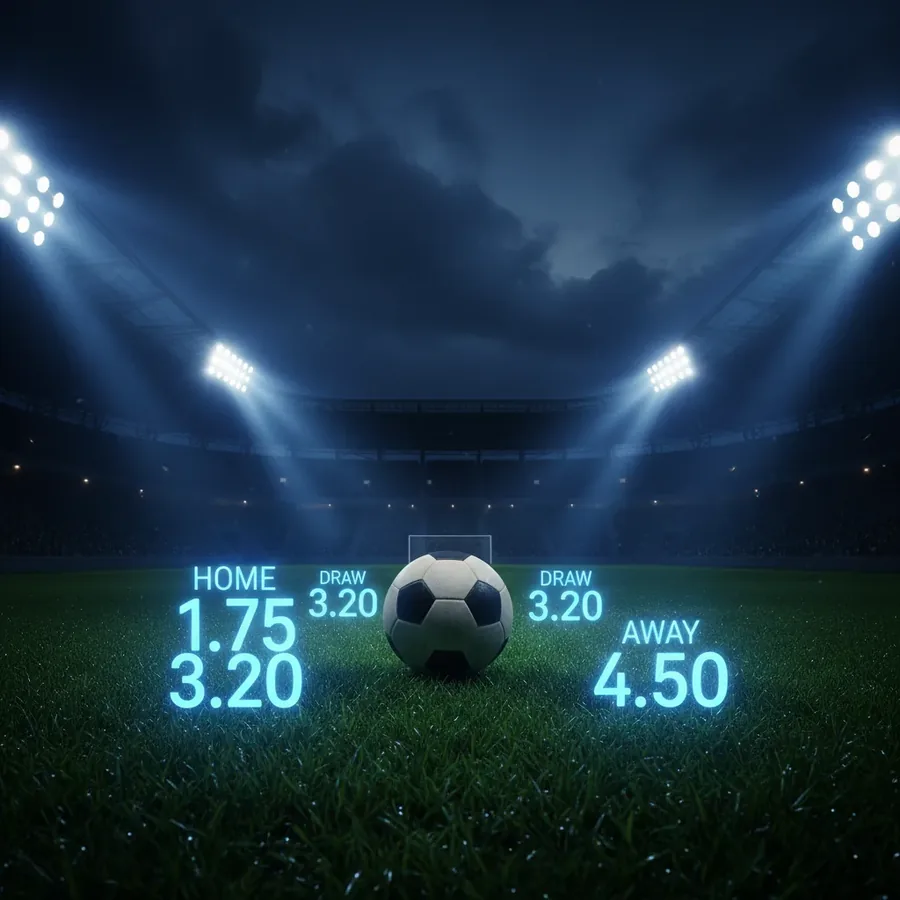
The Decimal odds format displays the total payout including the stake, which simplifies calculation for beginners compared to fractional formats. For instance, a 2.50 multiplier on a 10.00 EUR bet yields a 25.00 EUR return, comprising the original 10.00 EUR investment plus a 15.00 EUR net profit. This clarity helps new users understand their potential returns without complex mental math before placing a wager.
Multiplying three selections with odds of 1.50, 2.00, and 2.50 results in a combined accumulator price of exactly 7.50. A 10.00 EUR stake on this specific combination would generate a total payout of 75.00 EUR. The resulting net profit amounts to 65.00 EUR, demonstrating how combining lower-odds favorites can still produce significant gains if all predictions are correct.
Accumulators carry higher risk because every single selection must win for the bet to pay out, unlike single bets or double chance options. A Double Chance market covering two outcomes reduces individual odds significantly, often below 1.30, but increases the probability of success per leg. Beginners should weigh the ease of winning small amounts against the difficulty of hitting a multi-leg accumulator correctly.
Switch from 3/2 to 2.50
The British fractional format 3/2 indicates a profit of 1.50 EUR for every 1.00 EUR staked, excluding the original capital from the fraction itself. To convert this to the European decimal standard, one adds one to the fraction value, resulting in a decimal odd of 2.50. This conversion ensures that the total return includes both the winnings and the initial stake returned to the player.
In the American Moneyline system, an equivalent positive value of +150 represents the same 2.50 decimal odd structure for underdogs. This notation shows the profit on a hypothetical 100 unit stake, meaning a 150 EUR profit plus the 100 EUR stake equals 250 EUR total. Understanding these equivalences allows players to switch between platforms offering different regional odds formats without confusion.
A favorite in the same match might display as 4/6 in fractions or -150 in American lines, corresponding to a decimal odd of 1.67. Betting 10.00 EUR at this 1.67 rate returns 16.70 EUR, yielding a modest 6.70 EUR profit. Recognizing that lower decimals imply higher implied probabilities helps beginners manage expectations regarding potential payouts versus risk.
The decimal format is generally preferred by international players for its straightforward multiplication logic, whereas fractional and American formats require additional conversion steps. Newcomers should practice converting between 3/2, 2.50, and +150 to ensure they understand the value of their bets regardless of the interface language.
System bet not divided by three combinations
A standard treble accumulator requires all three selections to win, whereas a system bet like a Yankee or Trixie creates multiple independent wagers from the same pool. If a player selects three events but uses a system bet, the stake is divided into combinations such as doubles and trebles automatically. This structure provides a safety net, ensuring partial returns even if one selection loses.
For example, a Triple Chance bet covers two of the three possible match outcomes, significantly lowering the individual odds but increasing the hit rate. Combining three Double Chance selections into a system bet reduces the overall variance compared to picking three straight winners. The margin on these markets is typically higher, often ranging between 6% and 10%, which impacts long-term profitability.
The Live betting feature updates odds in real-time, with delays of 1 to 12 seconds typical across the industry depending on the sport. During active matches, margins widen by 1 to 3 percentage points compared to pre-match prices, reflecting the increased risk for the bookmaker. Beginners should be aware that rapid score changes can void pending bets if the acceptance delay expires before confirmation.
Unlike fixed pre-match accumulators, live bets allow for dynamic adjustments based on game flow, such as period-specific wagers in ice hockey or set scores in volleyball. These markets often have higher margins, reaching up to 11% for specific set result bets in top league volleyball. Players must act quickly to secure favorable odds before the market adjusts to the current game state.
Small budget: why 1.30 yields little
Betting on a Double Chance outcome often results in low odds around 1.30, which offers minimal profit relative to the risk involved. A 10.00 EUR stake at 1.30 odds generates only a 3.00 EUR net profit after returning the original stake. This slim margin means a player needs a high strike rate just to break even against the bookmaker's built-in house edge.
The house edge in these safe markets typically sits between 6% and 10%, frequently exceeding 10% during live play for table tennis matches. With hundreds of daily matches available, the volume of opportunities is high, but the low value per bet makes it difficult to build a bankroll. Small budgets are quickly eroded by the compounding effect of these margins over many losing or breakeven sessions.
Table tennis offers 20 to 40 markets per match, mostly focused on set and point totals, catering to high-frequency betting habits. However, the high margin on these frequent events means that consistent winning requires exceptional predictive accuracy that rarely persists. Beginners with limited funds should avoid relying solely on low-odds accumulators, as the statistical disadvantage accumulates rapidly over time.
Ice hockey presents a different landscape with 80 to 150 markets per NHL game, offering more variety than simple winner markets. The main market margin is lower at 4% to 7%, but period-specific bets jump to 7% to 10%. Understanding where the value lies helps small-budget players choose markets with better potential returns rather than chasing tiny profits on heavily favored outcomes.
What Does +150 Mean in Decimal Odds?
The American Moneyline notation +150 signifies that a successful 100 unit bet yields a 150 unit profit, excluding the returned stake. Converting this to the European decimal format involves dividing the profit by the stake and adding one, resulting in a decimal odd of 2.50. This format clearly shows the total return, making it easier to calculate potential earnings directly from the displayed number.
A 10.00 EUR stake placed at +150 (2.50 decimal) results in a total payout of 25.00 EUR. This amount comprises the 10.00 EUR original investment plus a 15.00 EUR net gain. Such clarity is essential for beginners who need to track their actual profit margins accurately without performing complex fraction arithmetic.
In contrast, a favorite listed at -150 implies a much lower risk and correspondingly lower reward, translating to a decimal odd of 1.67. Betting 10.00 EUR here returns 16.70 EUR, highlighting the inverse relationship between perceived likelihood and payout size. Understanding these extremes helps players balance their portfolio between high-risk high-reward bets and safer, lower-yield options.
The CS2 esports market features 40 to 120 markets per major tournament match, with margins ranging from 4% to 7% for top events. Dota 2 and secondary markets see slightly higher margins of 6% to 10%, affecting the long-term value of wagers. Comparing these figures to traditional sports like basketball, which has 3% to 5% margins on handicaps, reveals where better value might exist for astute bettors.
Sports, markets and margins in the betting offer
| Sport | Markets per Match | Margin | Live Betting | Highlight |
|---|---|---|---|---|
| Tennis | 120–200 Märkte bei ATP/WTA-Matches, 30–60 bei Challenger-Turnieren | 3–6 % im Siegermarkt, 6–8 % bei Satz- und Spielwetten | ja | Zwei-Weg-Markt ohne Unentschieden |
| Basketball | 150–250 Märkte pro NBA-Spiel, inklusive Spielerwetten | 3–5 % bei Handicap und Über/Unter, 4–6 % Moneyline | ja | Handicap und Totals statt Siegwette |
| Eishockey | 80–150 Märkte pro NHL- oder DEL-Spiel | 4–7 % im Hauptmarkt, 7–10 % bei Perioden-Wetten | ja | Drei-Weg-Markt nur in regulärer Spielzeit |
| E-Sport (CS2, Dota 2, LoL) | 40–120 Märkte pro Match bei großen Turnieren, 10–25 bei kleinen Events | 4–7 % bei CS2-Top-Turnieren, 6–10 % bei Dota 2 und Nebenmärkten | ja | Map-Handicaps und Runden-Totals zentral |
| Fußball | über 200 Märkte bei Top-Spielen, 60–100 in kleineren Ligen | 4–7 % im 1X2-Markt vor Anpfiff, 6–9 % live | ja | Drei Ausgänge, Unentschieden immer möglich |
| MMA | 30–60 Märkte pro Kampf, je nach Kartenposition | 5–8 % im Siegermarkt, 8–12 % bei Siegmethode | ja | Siegmethode und Rundenwetten sehr beliebt |
| Volleyball | 40–80 Märkte pro Match der Top-Ligen | 5–8 % im Siegermarkt, 8–11 % bei Satzergebnissen | ja | Satzwetten und Punkte-Totals dominieren |
| Formel 1 | 60–120 Märkte pro Rennwochenende inklusive Qualifying | 3–5 % bei Fahrer-Duellen, 12–20 % bei Outrights auf den Rennsieger | ja | Duelle günstiger als Langzeitwetten |
| Cricket | 80–150 Märkte pro Match, weniger bei T20-Ligen zweiter Reihe | 5–9 % im Siegermarkt, 8–12 % bei Spielerwetten | ja | Marge hängt stark vom Format ab |
Which nine outcomes does Half-time/Full-time have?
The Half-time/Full-time market requires a prediction for two distinct phases, creating exactly nine possible outcome combinations from the set of Home, Draw, and Away. This structure forces the bettor to analyze team momentum shifts rather than relying on single-match strength, as the draw option often appears in both halves during tight contests. The complexity increases the difficulty significantly compared to standard match result bets because every phase must align with the final scoreline.
Home-Home represents the favorite leading at the break and winning the full match, while Away-Away covers the underdog dominating throughout the entire duration. These extreme scenarios are statistically rarer than mixed outcomes like Home-Draw or Draw-Away, where a team leads initially but fails to secure victory. Understanding these specific trajectories helps players identify value in matches where one side is known for slow starts or strong finishes.
A Draw-Home combination occurs when the teams are level at half-time, but the home side secures the win in the second period. This specific outcome is common in leagues with high home advantage but low scoring efficiency in the opening stages. Bettors should look for historical data showing how often the leading team at half-time manages to maintain their position against defensive opponents.
Ice Hockey: 80 to 150 Markets Per Game
Ice Hockey offers between 80 and 150 markets per NHL or DEL game, providing extensive options beyond the standard moneyline wager. The house edge ranges from 4–7% in the main market, rising to 7–10% for period-specific bets which require predicting the winner of individual quarters. This variation allows beginners to choose between lower-risk main events and higher-variance period wagers depending on their bankroll strategy.
Period betting involves predicting the outcome of specific segments of the match, such as the first or second period only. These markets typically carry a higher margin of 7–10%, making them less efficient for long-term profitability compared to the overall game result. Players must track live performance closely, as early goals can drastically shift the probability distribution within just twenty minutes of play.
The wide range of 80 to 150 markets includes player props, total goals, and exact score predictions, catering to diverse analytical approaches. Beginners should start with the main market where the 4–7% edge is most favorable before exploring complex period or player-specific outcomes. Tracking the number of shots on goal can provide an edge in predicting period winners where offensive pressure correlates strongly with scoring.
Place Live Bet Despite 3–8 Second Delay
Live betting interfaces typically impose a 3–8 second delay between event action and odds updates to prevent arbitrage opportunities from sharp traders. This latency means that by the time a user confirms a wager, the actual game state may have already shifted, potentially invalidating the intended strategy. The delay acts as a buffer for the bookmaker's risk management systems to process incoming data streams accurately.
A 5-second average delay implies that a goal scored at 60:00 might not reflect in the odds until 60:05, during which time the market adjusts. If a player places a bet on the opposing team to score immediately after a miss, the odds may have already shortened due to the momentum shift. Understanding this lag helps users avoid placing impulsive bets on events that have technically concluded before their order reaches the server.
The 3–8 second window varies based on server load and the specific sport being tracked, with faster sports like tennis experiencing shorter lags than hockey. Beginners should anticipate this gap when calculating potential payouts, as the displayed odds are never instantaneous reflections of the live field. This technical constraint ensures that all participants trade on a synchronized view of the event, protecting the integrity of the wagering process.
-150 confused with +150: the consequences
American odds distinguish between favorites and underdogs using negative and positive signs, where -150 indicates a $150 stake is needed to win $100. Confusing this with +150, which requires only a $100 stake to win $150, fundamentally alters the implied probability and expected value of the bet. A misread sign turns a low-probability high-reward opportunity into a high-probability low-reward scenario, drastically changing the risk profile.
The decimal equivalent of -150 is approximately 1.67, representing a 60% implied probability, whereas +150 converts to 2.50, or a 40% implied probability. This 20% difference in perceived likelihood affects bankroll management strategies, as the volume of successful bets required to break even differs significantly between the two. Misinterpreting the sign leads to overestimating the chance of success for heavy favorites or underestimating the payout of longshots.
Correctly identifying the sign is critical for calculating the correct payout, as -150 yields $66.67 profit on a $100 stake, while +150 yields $150 profit on the same amount. Beginners often mistake the negative sign for a loss indicator rather than a stake requirement, leading to confusion when reviewing account statements. Clear distinction between the two formats prevents costly errors in understanding the true cost and reward of each wager type.
Boxing: Favorites Often Under 1.20 Odds
Boxing favorites frequently offer odds below 1.20, reflecting the high probability of a dominant champion securing a knockout or decision victory. These low margins mean a $100 stake yields only around $20 in profit, requiring substantial turnover to generate meaningful returns on investment. Such markets are best suited for high-volume bettors who prioritize consistency over large single-wager payouts.
Odds under 1.20 imply a greater than 83% chance of winning according to the bookmaker's model, yet boxing remains inherently unpredictable due to human factors. An upset in this range can wipe out multiple previous wins, emphasizing the need for strict bankroll management despite the apparent safety of the selection. The low payout ratio compensates for the reduced risk, but it does not eliminate the possibility of significant financial loss.
Comparing boxing favorites to other sports, the 1.20 threshold is much lower than typical football or basketball favorites, highlighting the sport's volatility. Beginners should calculate the necessary win rate carefully, as a 90% success rate is required just to break even on 1.11 odds. Understanding the relationship between the low odds and the high strike rate needed helps manage expectations regarding long-term profitability.
Handicap 3-5% vs Moneyline 4-6%
Basketball markets offer between one hundred fifty and two hundred fifty options per NBA game, including specific player wagers that attract significant attention from beginners looking for detailed engagement with the sport. This wide variety allows users to find niches beyond standard outcomes, though margins vary significantly depending on the bet type selected by the punter.
The house edge ranges from three to five percent for handicap and over-under bets, while moneyline wagers carry a slightly higher margin of four to six percent in the same sport. Beginners should note that handicap and totals are generally preferred over simple win bets because they offer lower costs and better long-term value compared to straight outcomes.
This difference means a ten euro stake on a handicap at 1.90 odds keeps more capital than a similar moneyline bet at 1.85 due to the lower vig. The reduced margin directly translates to higher expected returns over time, making these markets mathematically superior for players aiming to minimize losses across multiple betting sessions.
Contact
Live - online chat
Banking









Providers












Money X Casino 2026